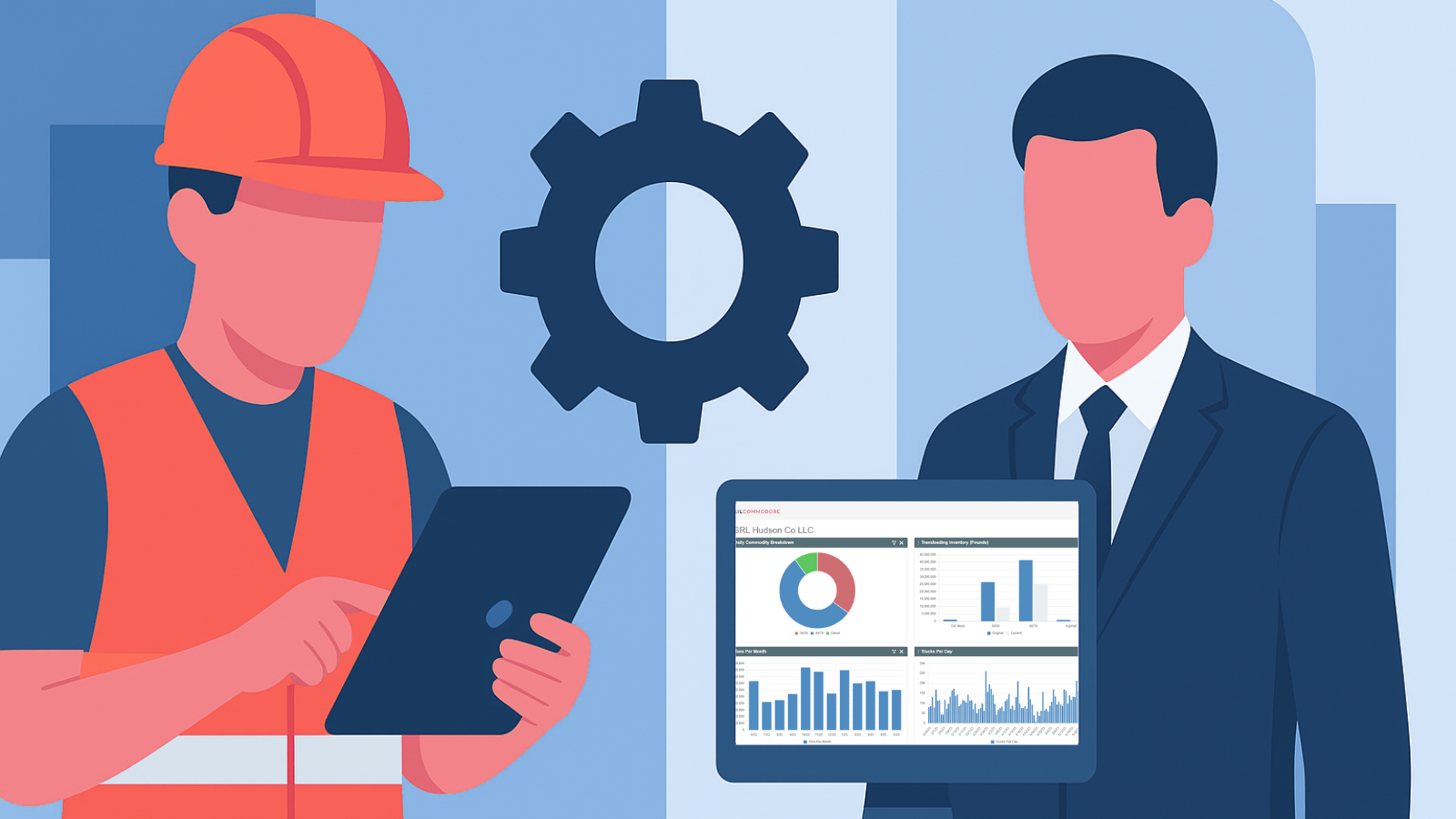
Creating software that serves two very different audiences in frontline workers and management can be one of the toughest challenges in technology design. Workers need simplicity and speed, while managers demand data-rich insights for oversight and strategy. The real test lies in bridging these competing needs without compromising usability or performance.
1. Workers Demand Usability
For software to succeed in the field, it must meet the practical needs of the people who use it every day; technicians, operators, and logistics staff. These users are focused on getting the job done efficiently, not navigating complex menus.
Key requirements include:
- Simplicity and Speed: The interface must be fast, intuitive, and workflow-driven, minimizing taps and clicks. Overly complex screens slow workers down and cause frustration.
- Rugged, Mobile Design: Industrial environments often involve noise, dust, or low lighting. Interfaces need large buttons, high contrast, and layouts that work even with gloved hands.
- Minimal Data Entry: Reduce manual input by using barcode scanning, RFID, voice commands, or sometimes just automated processes. This ensures accuracy and efficiency.
At US Rail and Logistics, our focus has always been on creating simple, effective workflows for frontline workers. In the transloading industry, employees often work outdoors or on the move, rarely at a desk. That’s why RailCommodore was built to be so user friendly and straightforward that most users don’t even need training to get started.
2. Management Requires Complexity
While workers need ease of use, management requires depth; data-driven insights to guide decision-making and strategy.
Core needs for management include:
- Robust Data Architecture: High quality data collection is essential. The system should record granular, time stamped, and context rich information such as who did what, when, and with which equipment.
- Advanced Analytics and Reporting: Dashboards, KPIs, and predictive tools turn operational data into actionable insights for planning, maintenance, and compliance.
- Integration with Enterprise Systems: Data should connect seamlessly with ERP, SCM, and CRM systems to give leaders a complete view of business performance.
With six terminals across the United States, US Rail and Logistics relies heavily on centralized data. RailCommodore has been vital in monitoring operations, generating real-time dashboards, and supporting strategic planning. Scheduled reporting keeps our management and accounting teams aligned and informed across every terminal.
3. The Central Design Conflict: Input vs. Output
This is where the real tension lies:
- Workers want minimal input, focusing on their physical tasks.
- Managers need rich, detailed data for analysis.
If software leans too far toward simplicity, managers lose insight. If it’s too data heavy, workers resist using it or make frequent errors. Poor data input leads to unreliable results, or what developers call “garbage in, garbage out.”
4. Strategies to Bridge the Gap
Balancing these needs requires smart design and automation. Successful industrial software often uses several key strategies:
- Layered Design and Role Based Access: Create separate interfaces for workers and managers built on a shared data structure. Workers get a simple, mobile tool for data capture; managers use a web dashboard for configuration and reporting.
- Smart Automation and Contextual Data: Use sensors, GPS, or geo-fencing to capture data automatically, like start and stop times, without manual input.
- Gamification and Feedback: Give workers instant value by showing productivity stats, safety reminders, or maintenance alerts. This encourages engagement and accurate data collection.
By combining usability, automation, and robust analytics, companies can create tools that empower both ends of the workforce. When technology respects how people actually work, on the ground and in the office, it becomes not just software, but a strategic advantage.
At US Rail and Logistics, we believe the best software connects every level of the organization. Our RailCommodore platform demonstrates how thoughtful design can satisfy both management’s need for insight and workers’ demand for simplicity—driving efficiency and accountability across every terminal.

Dennis Franklin
Manager, Software Development


Leave a Reply